
Anas Khan’s 2021 Maruti Suzuki Baleno used to give him 18 kilometres to the litre. It now gives him 15. Krishna Kumar, whose sedan once managed 18 to 20, is down to 16 or 17, and says the loss shows up in ways a fuel log misses: “The acceleration is slower, especially while overtaking, driving uphill or using the air conditioner.”
Neither of them changed anything about their vehicle. The petrol changed.
Since 1 April 2026, every pump in India dispenses E20 — petrol blended with 20 percent ethanol — and no E10 or E5 option remains anywhere in the country. India reached that blend five years ahead of its own 2030 target, which the government presents as an achievement and many drivers experienced as a surprise.
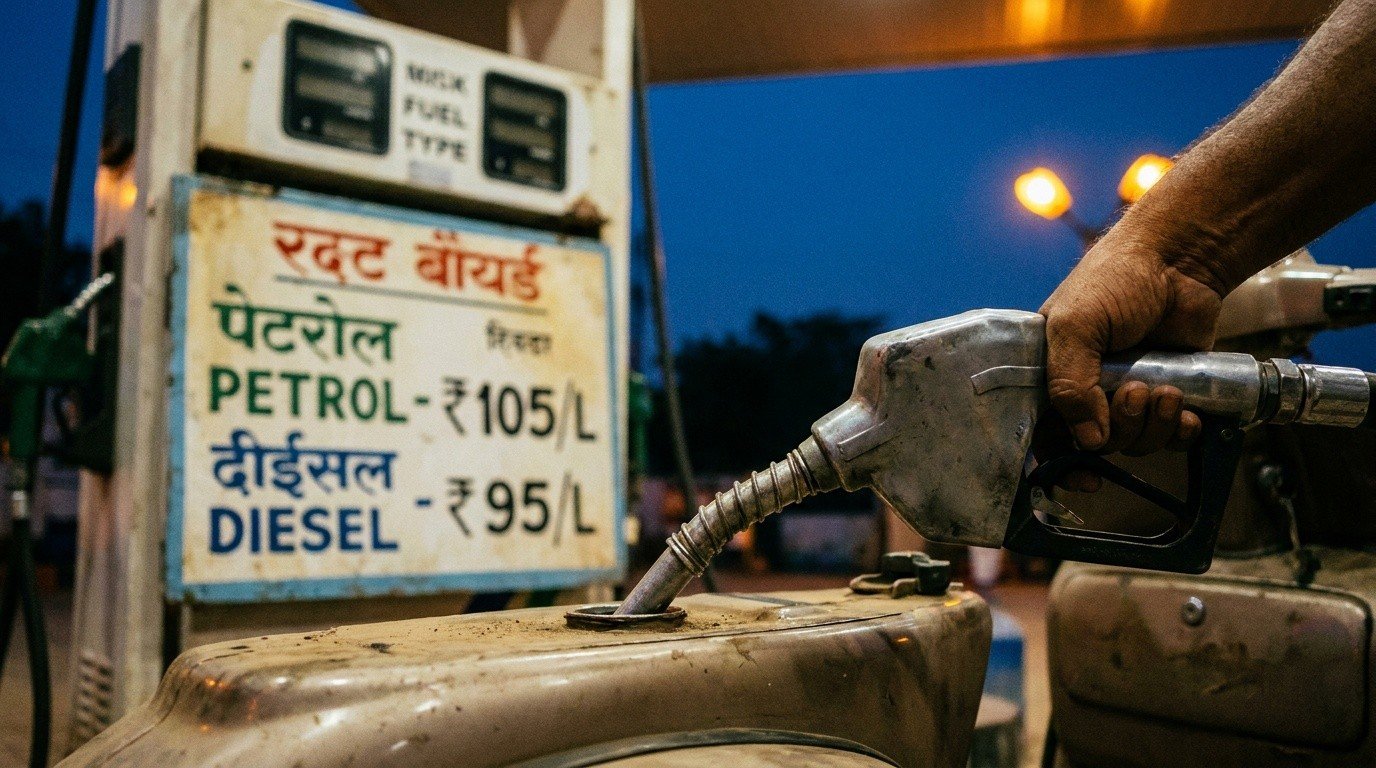
The mileage drop is real, and it isn’t a defect. Ethanol carries less energy per litre than petrol, so a tank of E20 moves you a shorter distance. That’s chemistry, not adulteration. What’s contested is the scale. The government’s position is that E20-compatible vehicles lose 1 to 2 percent. A LocalCircles survey in June 2026, drawing over 44,000 responses across 305 districts, found 66 percent of pre-2023 petrol vehicle owners reporting efficiency losses above 10 percent, up from 45 percent just a month earlier. Reports of unusual wear or extra repair visits climbed from 29 percent to 55 percent in the same window.
That pre-2023 line matters more than any single number. Manufacturers in India only began fitting E20-compatible fuel systems from around April 2023, leaving tens of millions of cars and two-wheelers running a fuel they were never certified for. Ethanol draws moisture out of humid air and acts as a solvent on certain rubber components. A workshop owner in Chinnamanur, Tamil Nadu described uncertified vehicles arriving with damaged seals and premature wear, and another in Kottayam reported rusting. Two-wheelers carry more rubber per unit of engine size, so they tend to show it first. Which means the scooter economy feels this before the SUV economy does.
The picture isn’t uniformly grim. Mechanics in Bengaluru reported no comparable mechanical failures, just customers unhappy about mileage. Nitin Gadkari has pointed to multiple industry bodies concluding E20 is safe for cars, and the petroleum ministry has called claims of engine damage “largely unfounded.”
The policy underneath all this is also genuinely defensible. India imports most of its crude, and the government puts cumulative savings from ethanol blending above ₹1.44 lakh crore. That money flows to sugarcane and maize farmers, Maharashtra above all, rather than to oil exporters. For a country that is structurally energy-insecure and invested in rural incomes, this is coherent industrial policy, not a whim.
The route taken to get there is the problem. Brazil, the comparison India’s defenders reach for most often, spent fifty years climbing from low blends to E27, and it rebuilt the fleet first: flex-fuel vehicles made up about 84.5 percent of new sales there in 2025, and Brazilian drivers pick their blend at the pump by price. In the United States, around 95 percent of petrol is still E10, half India’s blend, with E15 sold at roughly 10 percent of stations, clearly labelled. Both escalated slowly, preserved the choice, and told people what they were buying. India compressed the timeline, made the high blend compulsory rather than optional, and did it while flex-fuel vehicles remain rare.
There’s an upstream cost that gets less airtime than mileage. Sugarcane consumes roughly 2,860 litres of water for every litre of ethanol produced; rice-based ethanol can exceed 10,000. Much of that cane grows where groundwater is already overdrawn. Farmers have shifted acreage from pulses and oilseeds, crops India imports, toward maize and cane, pushing up feed costs for poultry and dairy. Trading an oil-import bill for pressure on groundwater and edible-oil imports may well be worth it. It was never put to anyone in those terms.
Inevitably, it turned political. The Supreme Court dismissed a plea seeking ethanol-free petrol for older vehicles in September 2025. A fresh PIL filed this month asks for something narrower and harder to refuse: ethanol content displayed on pumps and printed on bills, plus a published vehicle-wise compatibility list. Arvind Kejriwal has taken up engine damage as a line of attack, and Congress has questioned the ethanol interests held by Gadkari’s family businesses, which he says amount to under 0.5 percent of national production. In June, a report that the Attorney General had called the programme an “experiment” in court drew a flat denial from his office.
Strip out the noise and the grievance is small and specific. Nobody is owed cheap petrol forever. But if you keep a car at your parents’ place in Pune and drive it three weeks a year, you might want to know what’s in it. The pump won’t tell you.
Sources
- Al Jazeera — 15 July 2026
- DriveSpark — 8 July 2026 (LocalCircles survey, mechanic accounts)
- Business Standard — 10 July 2026 (oil ministry mileage estimate)
- Business Standard — 5 Aug 2025 (Brazil, US, EU blending comparison)
- Mongabay India — July 2026 (lessons from Brazil)
- LawBeat — July 2026 (PIL seeking mandatory E20 disclosure)
- Autocar India — Supreme Court dismisses PIL against E20 rollout
- Autocar India — Centre denies calling E20 an “experiment”
- Outlook India — food and water concerns
- PMF IAS — ethanol push and the water crisis
- Oneindia — Kejriwal’s E20 claims and the political row
SEO
- SEO title: E20 Petrol in India: What Nobody Told Drivers
- Meta description: E20 petrol is now the only option at every Indian pump. What it does to mileage, older vehicles and farmland — and why Brazil took fifty years to do it.
- Focus keyword: E20 petrol India
- Secondary keywords: ethanol blending India, E20 mileage drop, E20 older vehicles
- Slug: e20-petrol-india-controversy
- Category: Culture & Diaspora
- Tags: E20 petrol, ethanol blending, India energy policy, South Asian diaspora, sugarcane farming, road transport India