
Why Melodic Techno Is Basically India's Secret Weapon for the Next Musical Revolution
The rise of Indian melodic techno explored
MUSIC TECHNOLOGY
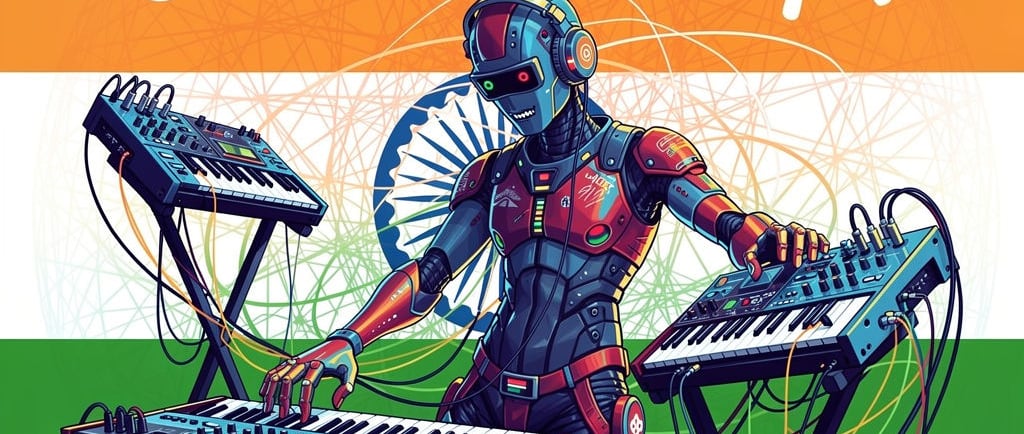
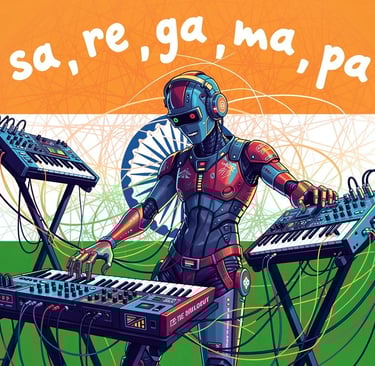
Look, I'm not saying melodic techno was invented for Indian music fusion, but the more you think about it, the more you realize these two worlds were kind of destined to collide in the most beautiful way possible.
The Rhythm Thing (Which Is Actually Everything)
Here's the thing: Indian classical music is obsessed with rhythm complexity. We're talking taals—those intricate rhythmic cycles that make a typical 4/4 beat look like it's napping. A 16-beat teental or the face-melting chaos of a 35-beat jhaptaal would make most Western musicians' heads explode.
Melodic techno? It's basically minimal electronic music that actually respects the drums. Unlike aggressive techno that just goes BOOM BOOM BOOM with the subtlety of a sledgehammer, melodic techno builds these hypnotic, driving rhythmic foundations that can actually hold complicated tabla patterns without either sound overpowering the other.
So when a tabla player does their thing over a melodic techno beat, it's not fighting—it's dancing.
Melody Doesn't Have to Scream
Indian music lives and dies by melodic ornamentation. That sitar will bend a note in ways Western instruments literally can't. The raga system lets musicians explore a single note for minutes—just painting it with different emotions.
Traditional Western electronic music often treats melody like an afterthought, cranking it up to "industrial squelch" levels. Melodic techno, though? It whispers. It builds these gorgeous, almost minimalist melodic lines that evolve gradually, leaving tons of space.
This is crucial. A sitar or sarangi needs breathing room. Melodic techno gives that space while keeping everything locked in electronically.
The Spiritual Vibe (Yeah, Really)
Okay, this might sound woo-woo, but hear me out: Indian classical music is designed to transport you. There's a meditative quality, an almost trance-like state that ragas are meant to induce.
Melodic techno? It's essentially electronic trance music that learned restraint. Those hypnotic, repetitive elements, the slow build, the immersive soundscapes—it's basically trying to do the same thing with synthesizers that Indian classical music does with acoustics.
You put a sarod player over a Jlin-style melodic techno track and suddenly you're in some transcendent space where the ancient and the futuristic are... not fighting. They're vibing together.
Production Is Already Compatible
Here's a nerdy but important bit: melodic techno's production aesthetic actually works with Indian instruments rather than against them.
Those glitchy, textural elements in modern melodic techno? They can complement the natural timbre variations of a sitar. The subtle layering of sounds? Perfect for weaving in traditional percussion. The emphasis on space and silence? That's basically how Indian musicians think about music anyway.
Compare this to, say, dubstep (which just sounds angry next to a bansuri) or house music (which is trying too hard to be the main character). Melodic techno is like the introverted friend who actually listens to what other people are saying.
Artists Are Already Doing This
This isn't theoretical. Artists like Nitin Sawhney, Susana Baca, and a whole wave of Indian electronic musicians are proving this works. Listen to some of the stuff coming out of the Indian underground electronic scene right now—it's mind-blowing because melodic techno provides the perfect skeletal structure for Indian melodic and rhythmic traditions to flourish.
The Real Reason It Works
At the deepest level, both musical traditions are trying to achieve transcendence. One uses ancient mathematics and acoustic instruments. The other uses modern production and synthesizers. But they're reaching for the same goal—that moment where the listener stops thinking and just feels.
Melodic techno's got the hypnotic, repetitive elements. Indian music's got the emotional depth and tonal sophistication. Together? They're basically unstoppable.
The future of world music fusion might not be as loud and obvious as the last few decades have been. It might just be minimal, beautiful, and absolutely mesmerizing.
And honestly? That sounds pretty good to me.