
At Lakmé Fashion Week in March, Aneeth Arora sent out a Péro collection built from almost nothing but blue and white. Stripes, slogans and motifs borrowed from Delft pottery and toile de Jouy all came in the same deep indigo, and The Nod Mag’s runway recap noted that she let “embroidery, craft, and shape carry the story instead.” It was a pointed kind of restraint, and it wasn’t the only example on the schedule.
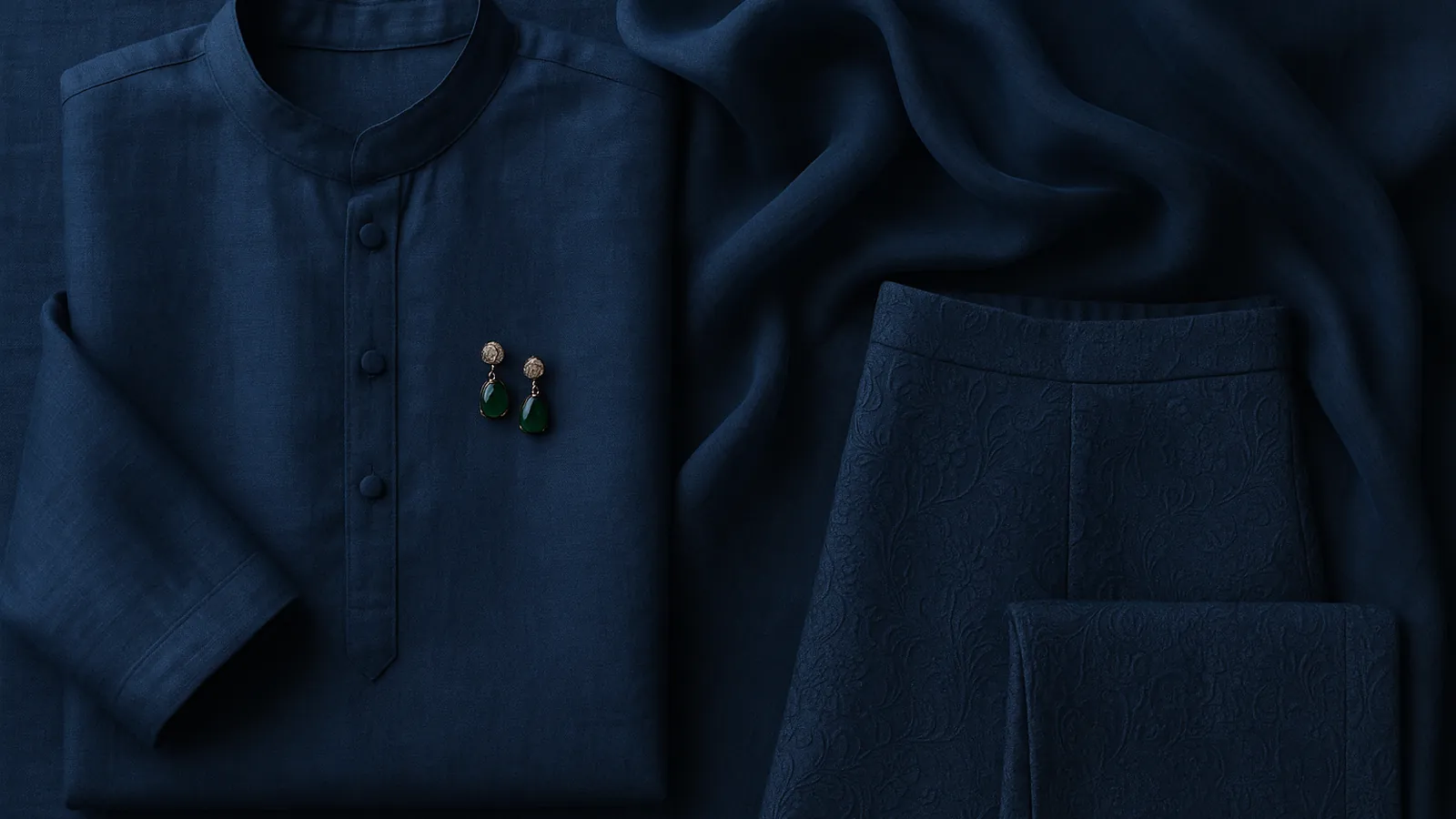
Tonal dressing, wearing a single colour family from neckline to hem and letting fabric do the talking, has moved from styling trick to 2026 signature. The style journal of designer label Rashika Mittal calls monochromatic Indian dressing the biggest trend of the year and sums it up in four words: one colour, multiple textures. Think a deep blue kurta over a slightly different blue pant, or a pink saree with a tonal pink blouse instead of the contrast blouse your mother would have insisted on.
The runway made the case more loudly than any shopping guide could. Chola’s collection that week was titled “Echoes in Monochrome” and stayed strictly in black, white and grey. Aza Fashions’ coverage caught Anamika Khanna’s AK|OK working white on white before sliding into browns, reds and blacks, and The Nod Mag noticed her signature beading and fringe only “made fleeting cameos.” The Boy’s Club sent out white jacket-and-trouser sets. Blue and white alone turned up at Abraham & Thakore, AFEW by Rahul Mishra, Payal Pratap and Pawan Sachdeva.
Menswear is in on it too. Harper’s Bazaar India, profiling designers who wear their own labels this summer, summed up Kunal Rawal’s signature as “tonal palettes, textured fabrics, and contemporary Indian menswear,” a formula he wears himself. For a category long split between safe beige and loud brocade, a sherwani built on shades of one colour offers a third way.
Why now? Part of the answer is optical. “Tonal dressing creates a long, unbroken visual line that elongates the body,” the Rashika Mittal journal argues, and the result “looks intentional and curated without trying hard.” When colour contrast drops away, everything else gets louder: the weave of a silk, the texture of the embroidery, the way sequins catch the light against a matching base. An outfit that leaned on red-and-gold drama has nowhere to hide when it’s all one shade, so craftsmanship suddenly matters more than colour.
That’s also where people get it wrong. “Monochrome becomes boring when everything is the same fabric,” the same journal warns. “Pair silk with organza, brocade with chiffon, or matte with shimmer.” Shade can drift within the family as well, so a dusty rose kurta can sit happily with a blush dupatta and mauve trousers. The dupatta should stay in the family rather than become the contrast piece. For the base shade, the journal points to ivory or champagne for formal occasions and all-black for evenings. If you want a pop of something, put it in your jewellery: emerald earrings against all-ivory, ruby studs against all-black.
For the diaspora, the timing lines up neatly. Diwali falls on Sunday, November 8 this year, with wedding season close behind, which means a lot of people are about to order outfits online, often from another continent and often for more than one event. A tonal set built around texture is harder to get wrong on a screen than a four-colour lehenga, and its pieces split apart easily. The ivory kurta from a sangeet can go with jeans at a Diwali party in Houston or a work dinner in Birmingham, and the indigo co-ord from an evening puja can turn up again at brunch.
Not every occasion wants restraint, and nobody is suggesting you arrive at a Punjabi wedding looking like a minimalist gallery wall. The same Rashika Mittal trend list puts contrast colour-blocking right beside tonal dressing, which says something about how fashion works now. The rule isn’t “never mix colours.” It’s “mix on purpose.”
What tonal dressing really signals is confidence in the clothes themselves. When the colour stops shouting, you notice the handwork, the drape, the choice of organza over chiffon. Aneeth Arora needed a single indigo to tell a whole story in March. For most of us, one good shade and three good fabrics will do the job at the next shaadi.
Sources
- The Nod Mag, Butool Jamal & Chloe Chou — 7 key trends from Lakmé Fashion Week 2026, March 23, 2026
- Aza Fashions — Lakmē Fashion Week 2026 highlights, March 20, 2026
- Rashika Mittal journal — Indian fashion trends 2026: what’s in, March 19, 2026
- Rashika Mittal journal — The art of monochrome: tonal dressing in Indian ethnic wear, March 13, 2026
- Harper’s Bazaar India, Santya Ahuja — Meet the designers who wear their own designs, 2026