
By AIE Music | 9 October 2026
Navanethem “Navi” Pillay has been named the winner of the 2026 Nobel Peace Prize, recognising her work advancing peace and international law. The South African jurist and former United Nations human rights chief receives the honour after a career spent confronting discrimination and pursuing accountability for serious human rights violations. Associated Press
For readers of AIE Music, her story offers a moment to reflect on courage, identity and the responsibility that comes with having a voice.
From Durban to the World Stage
Pillay was born in Clairwood, Durban, on 23 September 1941. She studied at the University of Natal, graduating with an arts degree in 1963 and a law degree in 1965. Her legal career began in a South Africa shaped by apartheid, where racial discrimination determined access to opportunities, institutions and basic freedoms. South African History Online
A South African of Indian Tamil heritage, Pillay’s journey also holds significance for the Indian diaspora. Her achievements belong firmly to South Africa’s history while resonating with communities whose identities and family stories cross national borders. Biographical background
In 1967, she became the first woman to establish a law practice in Natal Province. She later became the first Black woman to serve on South Africa’s High Court—a milestone in a profession from which people like her had long faced exclusion. International Criminal Court biography
These achievements invite us to look beyond the familiar image of an internationally recognised judge. Behind that public role was a young lawyer building a career within a system that restricted whose ambitions could flourish.
A Career Built Around Human Rights
Pillay’s work took her from South African courts to international institutions. She served as president of the International Criminal Tribunal for Rwanda and as a judge of the International Criminal Court. She subsequently served as United Nations High Commissioner for Human Rights from 2008 to 2014. El País; Gulf News
Her experience under apartheid remained an important part of her public story. In a 2014 tribute, then UN Secretary-General Ban Ki-moon connected her understanding of discrimination with her international human rights work, recognising her contribution to strengthening the UN’s presence and response to crises. United Nations tribute
The thread running through this career is the importance of institutions that can hear evidence, recognise suffering and hold powerful actors accountable.
What This Recognition Means
The Nobel Committee’s announcement places international justice within the work of building peace. Its message, as reported by Associated Press, emphasises the importance of resolving conflicts through law and ensuring accountability for abuses. Associated Press
That connection deserves attention. Peace depends partly on whether people believe that their rights matter, that their experiences can be heard and that serious wrongdoing can face scrutiny.
An award cannot complete that work. It can, however, bring renewed attention to the people and institutions undertaking it.
Why This Story Belongs on AIE Music
Music and storytelling give us ways to encounter lives beyond our own. They can preserve memory, express grief and make experiences of exclusion more visible.
Pillay’s work belongs to the legal world, but the questions it raises reach into culture: Who gets heard? Whose experiences are remembered? What do we do when another person’s dignity is threatened?
For artists, listeners and storytellers, those are meaningful questions. Her journey encourages us to consider how we use our own platforms—with care, curiosity and respect for the people whose stories we share.
At AIE Music, we recognise this Nobel moment as an opportunity to celebrate a remarkable career and reflect on the patient work behind public recognition.
Navi Pillay’s story reminds us that a voice gains lasting significance through the responsibility with which it is used.
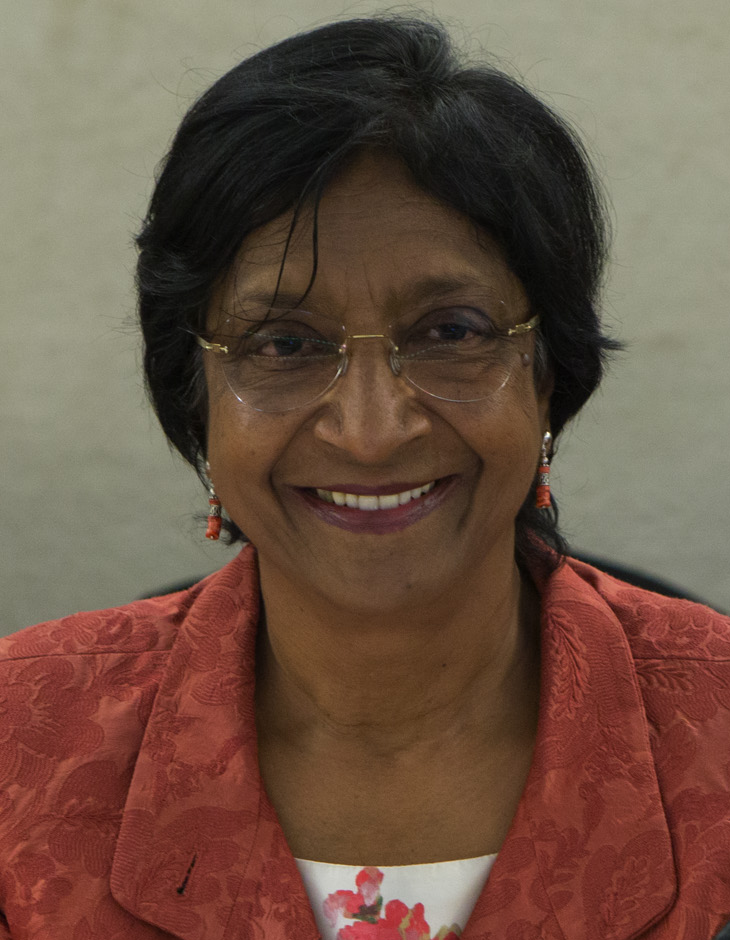
Featured photograph: Navi Pillay at the 26th session of the UN Human Rights Council, 10 June 2014. Credit: U.S. Mission Geneva / Eric Bridiers, via Wikimedia Commons. Public domain. Archive photograph; not an image of the Nobel announcement or ceremony.