
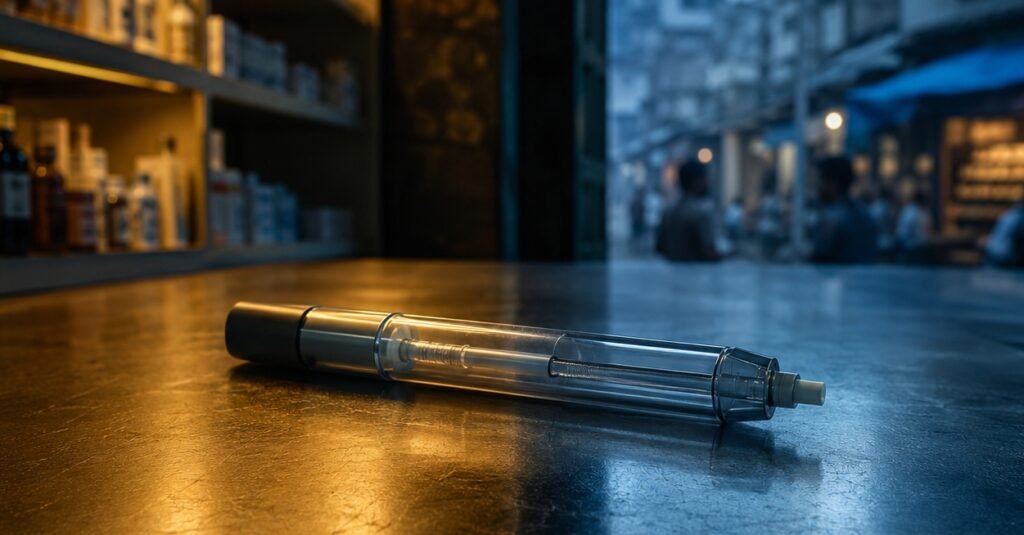
Two hundred and sixty pens. That’s how many suspected counterfeit Mounjaro injections a highway patrol pulled out of a vehicle near New Delhi, stashed with no temperature control and packaging that didn’t quite match the real thing. It’s a small seizure in a country that just became the world’s biggest source of legal, cheap GLP-1 drugs — and a preview of the problem India’s regulators are now scrambling to contain.
The trigger was March 20, 2026, the day Novo Nordisk’s Indian patent on semaglutide, the molecule behind Ozempic and Wegovy, ran out. More than 40 Indian drugmakers, including Dr. Reddy’s, Sun Pharma, and Glenmark, had generics ready within days, priced at a fraction of the original: as low as ₹1,290 a month against ₹8,800 to ₹16,400 for the branded version. Sales of injectable GLP-1 drugs in the country jumped 218 percent year over year by April, hitting ₹1,736 crore, up from ₹545 crore twelve months earlier. For a country where obesity and diabetes are both climbing, that price collapse is genuinely good news for a lot of people who couldn’t afford the drug before.
It’s also exactly the kind of gap counterfeiters live in. The Drug Controller General of India didn’t wait long to react. On March 10 and 11, before the patent had even expired, the DCGI issued directives banning surrogate advertising of GLP-1 drugs — the kind of marketing that pitches a “wellness supplement” or “metabolic booster” without technically naming the prescription drug inside it. A follow-up advisory on March 24 went further, telling manufacturers to stop misleading promotion altogether and reminding everyone that these are prescription-only medicines, meant to be prescribed by endocrinologists, internal medicine specialists, or cardiologists, not handed over at a wellness clinic or one-click checkout.
Then came the inspections. In the weeks since, CDSCO and state drug controllers have audited and raided 49 businesses across multiple regions: online pharmacy warehouses, wholesalers, retail counters, weight-loss clinics. The stated goal isn’t just chasing frauds, it’s cutting off the retail and clinic channels that let people buy semaglutide or tirzepatide without ever seeing the doctor who’s supposed to be watching for pancreatitis, kidney injury, or bowel complications, the real risks that come with these drugs even when they’re genuine.
Because a lot of what’s circulating isn’t genuine. The ASPA-CRISIL State of Counterfeiting in India 2025 report, released days before the patent cliff, put counterfeit medicines at roughly 28 percent of India’s entire pharmaceutical market, with 89 percent of urban consumers admitting they’d bought a fake at least once. GLP-1 drugs are an especially attractive target for that machinery because demand is outrunning even a flood of new legal supply. Some seized pens abroad have turned out to contain relabeled insulin instead of semaglutide, which can send a user into dangerous hypoglycemia rather than the appetite suppression they paid for. Others have shown up with no active ingredient at all, or been stored and shipped without the refrigeration these drugs need to stay stable.
This is where the story stops being a domestic regulatory footnote and starts mattering to anyone with family in India. The same platforms under scrutiny, IndiaMart listings, export sites, WhatsApp-forwarded pharmacy contacts, are the ones NRIs and their relatives have used for years to source everything from cheaper insulin to skincare. A parent back home hearing that a “GLP-1 injection” is now available for a tenth of the US price, with no prescription hassle, is not going to instinctively separate a Dr. Reddy’s-manufactured generic sold through an authorized pharmacy from a warehouse operator repackaging something else entirely. That distinction is exactly what the March directives are trying to enforce, and exactly what a family member scrolling a marketplace app at 11pm has no easy way to check.
None of this means the generics themselves are the problem. India becoming the low-cost global source for semaglutide is a legitimate public health win, the same role its generic industry has played for HIV antiretrovirals and cancer drugs for two decades. The risk sits specifically in the unregulated edges: the seller with no license, the clinic skipping the prescription step, the online listing promising a pen with no traceable manufacturer. The DCGI has said inspections and surveillance will continue, with license cancellation and legal action on the table for violators. Whether that keeps pace with a market that just grew nearly threefold in a year is the part still being written.
Sources
- As GLP-1 generics flood Indian market, drug regulator cracks down on illegal sale & misleading ads — ThePrint, 2026
- Govt Cracks Down On Unauthorised Sale Of GLP-1 Weight-Loss Drugs, Warns Of Legal Action — Outlook India, 2026
- Ozempic Generics in India 2026: GLP-1 Drug Manufacturing Race — India Briefing
- GLP-1 Patent Expiry in India & the Counterfeit Semaglutide Crisis — ForgeStop
- Semaglutide in India: CDSCO Cracks Down on Illegal GLP-1 Sales — MrMed
- Counterfeit Weight-Loss Drugs in India: A Growing Public Health Crisis — Medindia
SEO
- SEO title: India’s GLP-1 Crackdown: Cheap Ozempic Meets Fake Drug Risk
- Meta description: India’s semaglutide patent expired and prices crashed — now CDSCO is racing counterfeiters and illegal sellers flooding the GLP-1 market. What diaspora families should know.
- Focus keyword: GLP-1 drugs India crackdown
- Secondary keywords: generic semaglutide India, counterfeit Ozempic India, CDSCO GLP-1 regulation
- Slug: india-glp-1-crackdown-counterfeit-drugs
- Category: Culture & Diaspora
- Tags: South Asian diaspora, NRI health, India pharma, GLP-1, counterfeit medicine, public health