Sergio Gor landed in New Delhi in January 2026 carrying something rarer in Washington than an ambassadorship: actual proximity to the president. Carnegie Endowment’s own India program describes him as “one of Trump’s most trusted aides,” a man with walk-in access to the Oval Office, sent to a posting that had been quietly deteriorating for months. His brief, per Carnegie’s analysis, was simple to state and hard to execute: steady a relationship that tariffs, visa fights, and mutual irritation had knocked off balance, and get strategic cooperation moving again.
It worked faster than most postings do. Within weeks, India was pulled into “Pax Silica,” a US-led framework on AI and supply-chain security formalized through a State Department declaration in February. An EU-India free trade deal landed the same January Gor arrived, followed by accelerated negotiations with Oman, New Zealand and the UK that Carnegie estimates are worth tens of billions of dollars collectively. By August, Gor was standing on stage at the Indo-American Chamber of Commerce’s national convention in Mumbai, at an event literally themed “Redefining the India-US Comprehensive Strategic Partnership,” calling the relationship “the most consequential global partnership of the century.”
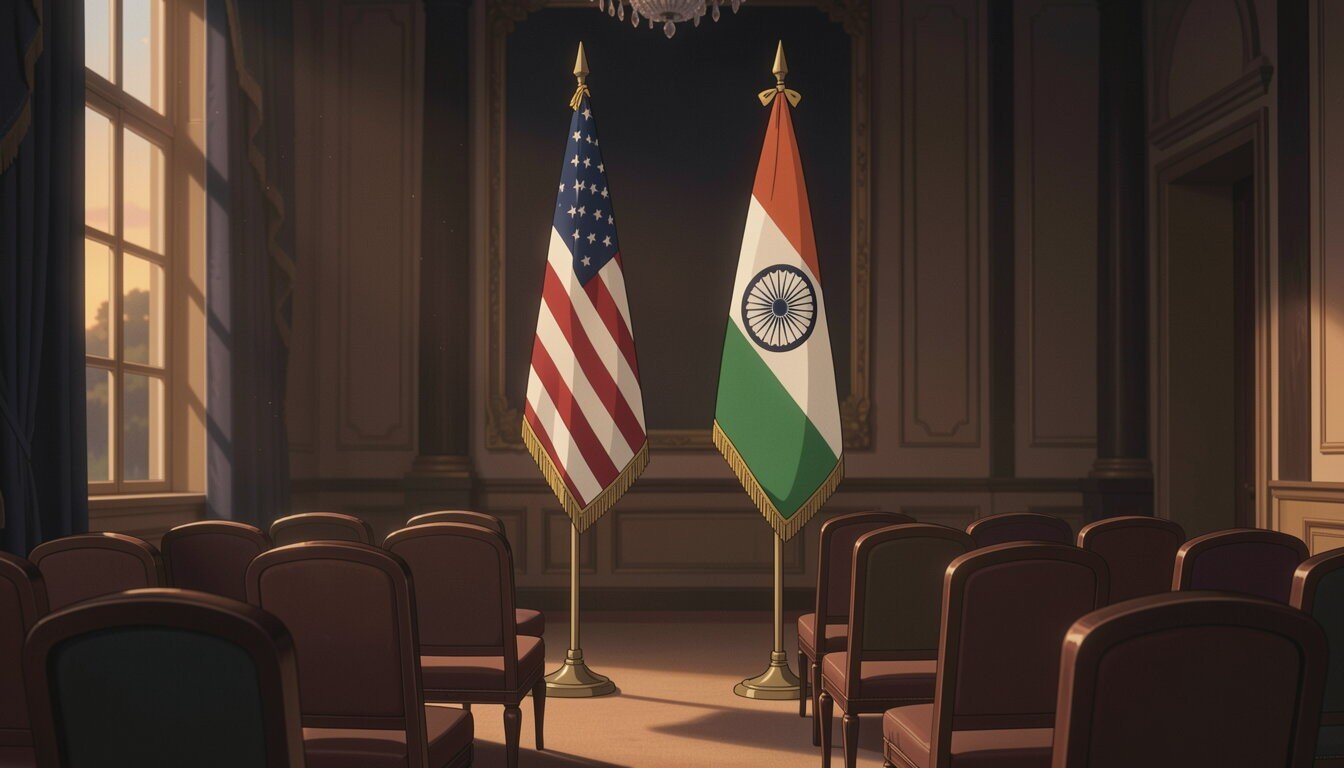
That’s the version of the story with an ambassador’s name attached to it. The less flattering version is what made an ambassador with walk-in access to Trump necessary in the first place. The US had imposed tariffs as high as 50% on Indian goods, justified as punishment for India’s continued purchase of Russian oil. A September 2025 presidential proclamation slapped a $100,000 fee on new H-1B petitions, a policy a federal court vacated in June 2026 before the Department of Homeland Security promptly filed to stay that ruling and kept collecting anyway. Fresh H-1B approvals fell 37% in fiscal 2026, even with Indian nationals still holding roughly 71% of all H-1B slots. India took the fee dispute to the WTO, with its finance minister calling it discriminatory and aimed specifically at Indian IT firms.
Carnegie’s framing is the useful part here, more useful than either the ribbon-cutting optimism or the tariff outrage on their own: India’s actual response, the analysts write, “has been characterized less by strategic rupture than by tactical adjustment.” Translation: India isn’t picking a side, and it isn’t picking a fight either. It’s doing what it has done for two decades under the banner of strategic autonomy, now increasingly described as multi-alignment — a strategy Carnegie sums up as “diversification, flexibility, and hedging.” Nine free trade agreements across 24 countries in a single year isn’t a retreat from Washington; it’s New Delhi making sure Washington is never again the only door in the room.
None of this is abstract for the roughly 5 million Indian-origin professionals and students who make American immigration policy a kitchen-table subject rather than a headline. The Green Card backlog is the number that lands hardest: Indian nationals now make up 79% of the queue across the top three employment-based categories, and BusinessToday reported this August that an Indian EB-2 applicant filing today faces a projected 179-year wait. A new $4,000 fee on H-1B and L-1 extensions takes effect this September, layered on top of the $100,000 new-petition fee still being litigated. Every one of these numbers is a direct input into whether a Bay Area engineer renews a lease, a Hyderabad graduate still applies to a US master’s program, or a firm in Bengaluru quietly becomes the fallback office instead of the pipeline.
Some of that decision-making is already visible in the data, not just the anecdotes. Immigration analysts tracking H-1B filings through 2026 have flagged a measurable uptick in reverse migration, Indian tech professionals who’d already built a life in the US choosing to relocate back rather than wait out fee litigation and a green card queue longer than most human lifespans. It’s not a mass exodus, and Gor’s diplomacy hasn’t caused it so much as failed, so far, to reverse it. But it’s the kind of quiet demographic drift that trade communiqués don’t capture and strategic partnership press releases never mention, because it doesn’t happen at a podium. It happens in a family’s group chat, over months, as one visa renewal after another gets more expensive and less certain.
That’s the real stakes of Gor’s “steadying” mission, underneath the AI pacts and the convention-stage superlatives. Strategic partnerships get negotiated between governments in rooms in Delhi and Washington. Visa backlogs and tariff shocks get lived, year after year, by families deciding whether the American half of a transnational career is still worth the wait. Pax Silica will make headlines. A 179-year green card queue will make decisions — quietly, one household at a time, long after the ambassador’s welcome dinners are over.
Sources
- Carnegie Endowment for International Peace — India and a Changing Global Order: Foreign Policy in the Trump 2.0 Era, March 2026
- Republic World — What India, US Accomplish Together Will Shape the Future: US Ambassador Sergio Gor, June 2026
- The Tribune — US envoy Gor to outline roadmap for deeper India-US trade, investment, strategic cooperation, August 2026
- CNN — H-1B visa hike has sparked panic in India, September 2025
- VisaVerge — Tariffs and Immigration Policy Threaten India-US Ties for Immigrants
- BusinessToday — 179 year wait: Green Card backlog traps nearly 1 million Indians, making up 79% of total queue, August 2026
- ISAS NUS — H-1B Visa Fee Hike Further Strains India-US Trade Deal